
What Is Air Cargo? A Complete Guide to Global Air Freight
In the fast-paced world of global trade, selecting the optimal freight solution is critical. Yet, the complexities of logistics terminology and processes can often create uncertainty for businesses. For companies requiring speed and reliability, air cargo presents a powerful solution, but questions around its process, cost, and suitability are common. This comprehensive guide is designed to demystify the entire operation, providing the clarity needed to make informed decisions for your supply chain.
We will provide a clear definition of what air freight entails, outline the end-to-end shipping journey, and identify the key players involved in moving your goods. By the end of this article, you will have the essential insights to confidently evaluate if air cargo is the right strategic choice for your UK-based business and how it can be leveraged to optimise your global logistics strategy.
Key Takeaways
- Understand the strategic role of air freight in accelerating your supply chain and meeting urgent delivery deadlines.
- Identify the key players in the air freight ecosystem, from carriers to customs brokers, to better navigate the shipping process.
- Grasp the step-by-step journey of an international air cargo shipment, including the critical handling requirements for different types of goods.
- Evaluate the primary advantages and disadvantages of air freight to determine if its speed and reliability justify the investment for your business.
Defining Air Cargo: More Than Just Goods on a Plane
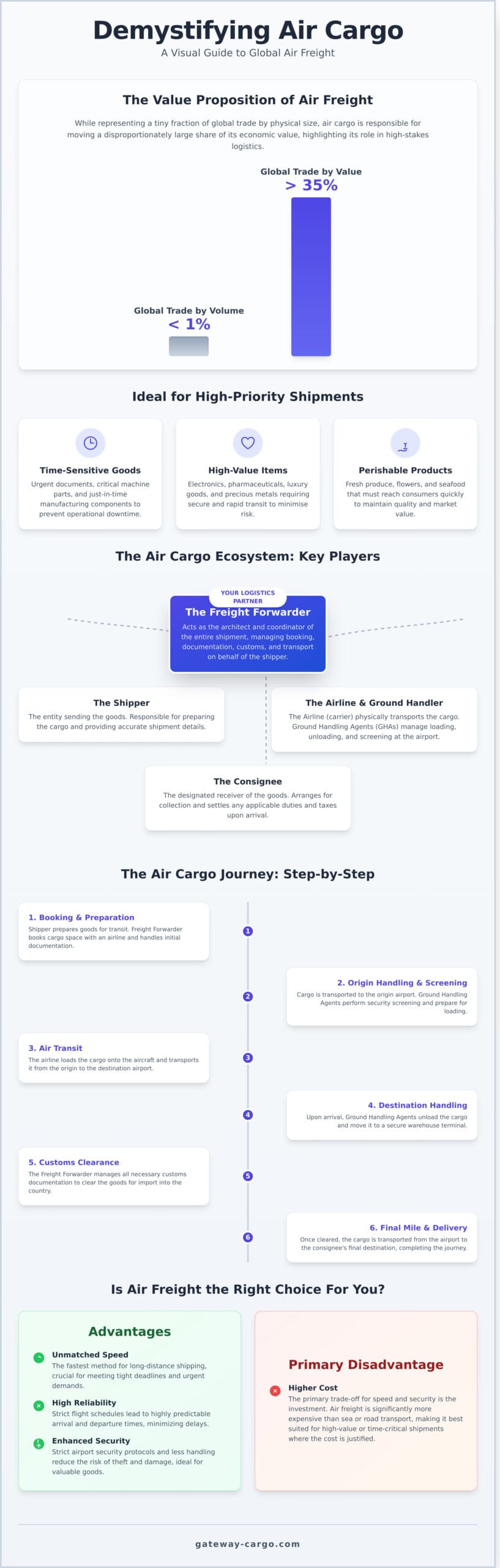
At its core, air cargo refers to the commercial transportation of goods and materials by aircraft. It is a critical component of the global logistics network, providing the speed necessary to connect markets and enable international trade with unparalleled efficiency. While air transport accounts for less than 1% of global trade by volume, it is responsible for moving over 35% of its value, underscoring its vital role in modern supply chains.
This mode of transport is indispensable for shipments where speed is the primary concern. Industries rely on air cargo solutions for:
- Time-Sensitive Goods: Urgent documents, critical machine parts, and just-in-time manufacturing components that are essential for preventing operational downtime.
- High-Value Items: Electronics, pharmaceuticals, luxury goods, and precious metals that require secure and rapid transit to minimise risk.
- Perishable Products: Fresh produce, flowers, and seafood that must reach consumers quickly to maintain quality and market value.
Air Cargo vs. Air Freight: Is There a Difference?
In the logistics industry, the terms ‘air cargo’ and ‘air freight’ are often used interchangeably. However, a subtle distinction exists. ‘Air cargo’ typically refers to the specific goods or consignment being transported by an airline. In contrast, ‘air freight’ more broadly describes the service, process, or system of transporting that cargo from origin to destination, including the associated costs and logistics involved.
Air Cargo vs. Courier Services: Understanding the Distinction
While both utilise aircraft, air cargo and express courier services (such as DHL or UPS) serve different logistical needs. Courier services are optimised for smaller, individual parcels and offer an integrated, door-to-door solution with simplified pricing and documentation. Air cargo, on the other hand, is designed for larger, often palletized shipments. The process is more complex, typically moving goods between airports and requiring a freight forwarder to manage customs clearance, documentation, and ground transportation to create a complete door-to-door solution.
The Air Cargo Ecosystem: Key Players and Their Roles
A successful air freight shipment is a complex operation, much like a well-rehearsed orchestra. Each participant has a distinct and vital role, and seamless coordination is essential for a timely and secure delivery. This collaborative ecosystem ensures that global supply chains function efficiently, with professional Air Transport Services forming the backbone of international trade. At the centre of this process is the freight forwarder, acting as the conductor who synchronises every element of the journey for your air cargo.
The Shipper and Consignee
The process begins with the Shipper (also known as the consignor), the entity sending the goods. Their primary responsibility is to prepare the cargo for transit and provide accurate details about the shipment, including its contents, value, and dimensions. At the destination, the Consignee is the designated receiver. Their role involves arranging for the collection of the goods and settling any applicable duties or taxes upon arrival, ensuring a smooth final-mile delivery.
The Freight Forwarder: Your Logistics Partner
The freight forwarder is the architect and primary coordinator of the entire shipment. They do not typically own the aircraft but act as an expert intermediary, managing the complex logistics on behalf of the shipper. Their critical functions include:
- Booking cargo space with the most suitable airline.
- Preparing and managing all necessary documentation, such as the Air Waybill (AWB).
- Arranging customs clearance in both the UK and the destination country.
- Coordinating ground transport and warehousing as required.
By leveraging established relationships with a global network of carriers, a forwarder optimises routes and costs to deliver a bespoke solution. Learn how Gateway Cargo acts as your dedicated logistics team.
The Airline (Carrier) and Ground Handling Agents
The Airline, or carrier, is the party that physically transports the air cargo from the origin airport to the destination. They are responsible for the safe and timely operation of the aircraft. Once the aircraft lands, the Ground Handling Agents (GHAs) take over. These specialists manage all on-the-ground operations at the airport terminal, including the careful loading and unloading of cargo, secure short-term warehousing, and performing mandatory security screening as per UK Civil Aviation Authority regulations. To manage this complexity, many of these key players rely on specialized industry expertise from companies such as Air Tech Consulting for management-level support and technical services.
Types of Air Cargo: What Can Be Shipped by Air?
In air freight, not all goods are handled in the same way. The type of air cargo you are shipping directly determines the entire logistics process, from the required handling procedures and documentation to the final transport cost. Accurate classification is not merely an administrative step; it is a critical requirement for ensuring the safety of the aircraft, its crew, and your shipment, while also maintaining full regulatory compliance.
Shipments are broadly divided into two primary categories: General Cargo and Special Cargo. Understanding this distinction is the first step toward a seamless shipping experience.
General Cargo
General Cargo refers to any goods that do not require special handling, temperature control, or additional security measures. This is the most common and straightforward category, encompassing a vast range of products such as consumer electronics, apparel, automotive parts, and general retail merchandise. For most UK businesses, their shipments will fall under this classification, representing the most efficient and cost-effective form of air transport.
Special Cargo: Goods Requiring Expert Handling
Special Cargo demands rigorous protocols and expert management due to its inherent nature. These goods require specialised handling, packaging, and documentation to be transported safely and in compliance with international regulations. Key types of special cargo include:
- Perishables: Items such as pharmaceuticals, fresh produce, and flowers that require a temperature-controlled environment (cold chain logistics) to maintain their integrity from origin to destination.
- Valuable Cargo (VAL): High-value goods, including jewellery, precious metals, and currency, that necessitate enhanced security protocols, secure storage facilities, and discrete handling throughout their journey.
- Dangerous Goods (DG): Materials that can pose a risk to health, safety, or property. This includes items like lithium batteries, certain chemicals, and compressed gases. Their transport is strictly governed by the International Air Transport Association (IATA) Dangerous Goods Regulations (DGR).
Unit Load Devices (ULDs): The Containers of the Sky
To optimise the loading process and protect goods in transit, freight is consolidated into Unit Load Devices (ULDs). These are standardised pallets and containers designed to fit securely within an aircraft’s cargo hold. By grouping multiple packages into a single ULD, we ensure faster handling, reduced risk of damage, and more efficient use of aircraft space. Common ULDs include flat aluminium pallets (e.g., PAG) and contoured containers (e.g., AKE) that fit the shape of the fuselage.
The Air Cargo Process: A Step-by-Step Journey
The journey of an international air cargo shipment is a complex, multi-stage process involving precise coordination between shippers, forwarders, airlines, and customs authorities. Understanding this lifecycle is key to optimising your supply chain for speed and efficiency. To demystify the process, we have broken it down into four distinct, manageable stages, from initial booking to final delivery.
Stage 1: Booking and Documentation
The process begins when the shipper, or their freight forwarder, books capacity on a specific flight with an airline. This initial step is critical for securing space and scheduling. Simultaneously, essential documentation is prepared. The most important document is the Air Waybill (AWB), a non-negotiable contract of carriage that details the shipment’s contents, origin, destination, and terms of transit. Accurate documentation is fundamental for a seamless journey.
Stage 2: First-Mile Transport and Consolidation
Once booked, the goods are transported from the shipper’s premises to the freight forwarder’s warehouse. This is known as first-mile transport. Here, the shipment may be consolidated with other goods destined for the same location into a single Unit Load Device (ULD). This practice optimises space and cost. Before leaving the warehouse, all cargo undergoes rigorous security screening and final checks to ensure compliance with aviation regulations.
Stage 3: Airport Handling and Departure
The consolidated ULDs are then moved to the airline’s cargo terminal at the departure airport. At this point, the shipment must pass through UK customs for export clearance. Once cleared, the airline’s designated Ground Handling Agent takes responsibility for loading the ULDs securely onto the aircraft. This stage is meticulously managed to adhere to strict flight schedules and safety protocols, ensuring the entire air cargo operation is efficient.
Stage 4: Arrival, Customs Clearance, and Delivery
Upon arrival at the destination airport, the cargo is unloaded and transferred to the airline’s import terminal. The shipment must then clear import customs. This involves submitting the required documentation, inspection, and the payment of any applicable duties and taxes. Once customs authorities release the goods, they are ready for final-mile delivery to the consignee’s specified address, completing their global journey.
Our logistics specialists manage this entire process to ensure your cargo moves without delay. Discover our bespoke air freight solutions today.
Advantages and Disadvantages of Air Cargo
Selecting the optimal freight mode is a critical strategic decision that directly impacts your supply chain’s efficiency, cost, and speed-to-market. While air freight offers unparalleled speed, it is not the ideal solution for every shipment. Understanding the specific benefits and limitations of air cargo allows businesses to make informed decisions that align with their commercial objectives, balancing urgency against budget.
This section provides a clear, balanced overview to help you determine when air transport is the most strategic choice for your logistics needs.
Key Advantages: Why Businesses Choose Air
For many businesses, the strategic benefits of air freight far outweigh its higher cost, particularly when dealing with high-value or time-critical goods. The primary advantages include:
- Unmatched Speed: Air is the fastest shipping method, reducing transit times from weeks to days. This is essential for urgent shipments, perishable goods like pharmaceuticals, and just-in-time inventory models that minimise warehousing costs.
- Enhanced Reliability: Airline schedules are highly dependable, with minimal delays compared to ocean freight. This predictability allows for precise supply chain planning and helps maintain commitments to customers.
- Superior Security: Shorter transit times and stringent security protocols at airports significantly reduce the risk of theft and damage. This makes air freight the preferred choice for high-value items such as electronics, luxury goods, and sensitive documents.
- Global Reach: The extensive network of airports connects virtually every corner of the world, providing access to remote and landlocked markets that may be difficult to reach via sea or road.
Primary Considerations and Disadvantages
Despite its advantages, there are significant factors to consider before committing to air freight. These considerations are crucial for maintaining a cost-effective and sustainable supply chain.
- Significant Cost: Air freight is considerably more expensive than sea or road transport, with costs calculated based on chargeable weight. The higher price in GBP per kilogram can substantially affect the final landed cost of goods.
- Capacity and Size Limits: Aircraft have strict limitations on the weight and dimensions of cargo they can carry. This makes air transport unsuitable for bulk commodities, heavy machinery, or oversized items.
- Environmental Impact: Air transport has a higher carbon footprint per kilogram shipped compared to other freight modes. For businesses focused on ESG (Environmental, Social, and Governance) targets, this is a vital consideration.
Ultimately, the decision to use air cargo depends on a careful evaluation of your product’s value, urgency, and destination. By weighing these factors, you can optimise your logistics for both performance and cost-efficiency. Understanding when to leverage this premium service is key to building a smarter, more responsive supply chain.
To determine the most effective strategy for your specific products and routes, it is essential to consult with logistics experts. Get a bespoke analysis of your shipping needs with Gateway Cargo.
Harnessing the Power of Air Freight for Your Business
In today’s fast-paced global market, understanding the strategic value of air freight is paramount. As we’ve explored, it is a complex ecosystem designed for speed and reliability, making it indispensable for time-sensitive and high-value shipments. The key is to balance its distinct advantages against your logistical requirements to make informed decisions for your supply chain.
Navigating the intricacies of the air cargo industry requires a partner with deep expertise. At Gateway Cargo, our global network of logistics specialists delivers bespoke freight solutions tailored to every need. With a firm commitment to creating sustainable and efficient supply chains, we ensure your goods are not only moved quickly but also responsibly.
Ready to optimise your supply chain with reliable air freight? Request a consultation with our specialists today and let us help you elevate your logistics strategy to new heights.
Frequently Asked Questions About Air Cargo
How is the cost of air cargo calculated?
The cost of air cargo is determined by its ‘chargeable weight’-the greater of either the actual physical weight or the volumetric weight. This base rate is then combined with several other surcharges. These typically include fuel and security surcharges, airport handling fees at both origin and destination, and costs for customs clearance. For a transparent and precise quotation in GBP (£), our specialists provide a detailed breakdown of all applicable charges for your specific shipment route and requirements.
What is the difference between actual weight and volumetric weight?
Actual weight is the shipment’s gross weight as measured on a set of scales. Volumetric weight (or dimensional weight) is a calculation based on the consignment’s dimensions (Length x Width x Height) to determine the space it occupies. Airlines use the higher of the two values to calculate freight charges. This industry-standard practice ensures that light but bulky items that take up significant aircraft space are priced fairly in relation to small, heavy goods.
What is an Air Waybill (AWB) and why is it important?
An Air Waybill (AWB) is a critical transport document that functions as the contract of carriage between the shipper and the airline. It is non-negotiable and contains essential details, including shipper and consignee information, flight routing, and a description of the goods. The AWB’s unique number allows for real-time tracking of the shipment and is a mandatory document for customs authorities, ensuring a seamless and compliant transit through international borders.
Are there size and weight limits for air cargo shipments?
Yes, limitations on size and weight are dictated by the specific aircraft used for transport. Cargo flying in the lower-deck hold of a passenger aircraft is typically limited to a height of 160cm. In contrast, dedicated freighter aircraft can accommodate much larger and heavier consignments on their main deck. Our logistics specialists provide bespoke solutions by matching your shipment’s requirements to the optimal aircraft, ensuring even oversized and out-of-gauge cargo can be transported efficiently.
What kind of goods are prohibited or restricted from being shipped by air?
For safety and security, the International Air Transport Association (IATA) regulates goods for air transport. Prohibited items include explosives, flammable gases and liquids, toxic substances, and corrosive materials. Other items are restricted, meaning they can be shipped under strict conditions. These include lithium batteries, perfumes, and certain chemicals, which require specialised packaging, labelling, and documentation. Our experts ensure your shipment is fully compliant with all global and UK regulations.
How long does customs clearance typically take for air cargo?
In the United Kingdom, customs clearance for air cargo can be completed within a few hours of arrival, assuming all documentation is correctly prepared and submitted in advance. However, the process can extend to 24-48 hours if His Majesty’s Revenue and Customs (HMRC) selects the shipment for a physical inspection or if paperwork contains errors. Our proactive customs brokerage services are designed to minimise these delays by ensuring absolute accuracy and compliance from the outset.