
Cargo Carrier Comparison: Choosing the Best Mode for Global Logistics in 2026
What if your current choice of cargo carrier is actually inflating your overheads by 14% through unmanaged fuel surcharges and inefficient intermodal handovers? In late 2024, UK businesses faced a 9% increase in average shipping costs, leaving many supply chain directors searching for more predictable alternatives. You’re likely already dealing with the frustration of transit times that fluctuate by as much as eight days on standard routes, making it difficult to maintain lean inventory levels.
We agree that the complexity of modern global logistics requires more than just a standard shipping label; it demands a smarter, solution-oriented strategy. This guide highlights the professional distinctions between ocean, air, and land carriers to help you optimise your supply chain efficiency and control your £ per kilogram expenditure. We’ll provide a data-backed framework for selecting the best mode based on the specific cost-to-speed ratios expected throughout 2026, ensuring your logistics remain seamless and scalable.
Key Takeaways
- Clarify the professional distinctions between maritime, air, and road transport to ensure your selected cargo carrier meets the specific demands of your 2026 logistics strategy.
- Conduct a strategic cost-benefit analysis between high-speed air freighters and high-capacity ocean vessels to optimise your transit times and total expenditure.
- Explore the vital role of intermodal transport and the rise of rail freight as a sustainable, cost-effective alternative for long-haul UK and international routes.
- Identify key selection criteria, from matching delivery deadlines to calculating the total cost of carriage in GBP, including all relevant duties and surcharges.
- Discover how bespoke, specialist-led logistics solutions can integrate seamlessly into your team to build a smarter, more resilient global supply chain.
What is a Cargo Carrier? Defining the Backbone of Global Trade
In the context of 2026 global trade, a cargo carrier represents the engine of international commerce. It’s essential to distinguish between consumer-grade vehicle accessories and the industrial-scale assets used in B2B logistics. While a weekend driver might seek a plastic box for their car roof, a logistics manager requires a vessel or vehicle capable of moving thousands of tonnes across borders. This distinction is vital for businesses aiming to scale their operations in an increasingly complex market.
Maritime vessels, cargo aircraft, and heavy goods vehicles (HGVs) form the three pillars of commercial carriage. Maritime transport remains the Backbone of Global Trade, handling over 80% of global trade volume by weight as of 2024. Selecting the right carrier type isn’t just a tactical choice; it’s the most critical decision in supply chain optimisation. Gateway Cargo specialises in bespoke solutions across all these modes, ensuring your freight moves through the most efficient channels possible.
The Role of the Professional Cargo Carrier
A professional carrier functions as both a legal entity responsible for the goods and the physical vessel transporting them. Reliability here is non-negotiable for maintaining ‘just-in-time’ inventory cycles, where a delay of even six hours can halt a UK production line. By 2025, 65% of top-tier carriers adopted AI-driven systems to track and optimise routes in real-time. These systems account for weather patterns and port congestion to ensure predictable delivery windows and reduce fuel consumption.
Industrial Carriers vs. Personal Storage
B2B shippers must look beyond consumer-grade definitions to understand the true scale of global logistics. A standard Ultra Large Container Vessel (ULCV) can carry over 24,000 TEU (Twenty-foot Equivalent Units), while a Boeing 747-8F freighter offers a payload capacity of 137 tonnes. A cargo carrier is the physical vessel or vehicle used by a freight forwarder to transport commercial goods. Gateway Cargo provides the expertise to navigate these massive scales, offering “Seamless Logistics for a Smarter Supply Chain” through tailored air, ocean, and road freight strategies that prioritise precision and sustainability.
Ocean vs. Air Carriers: A Strategic Comparison of Speed and Volume
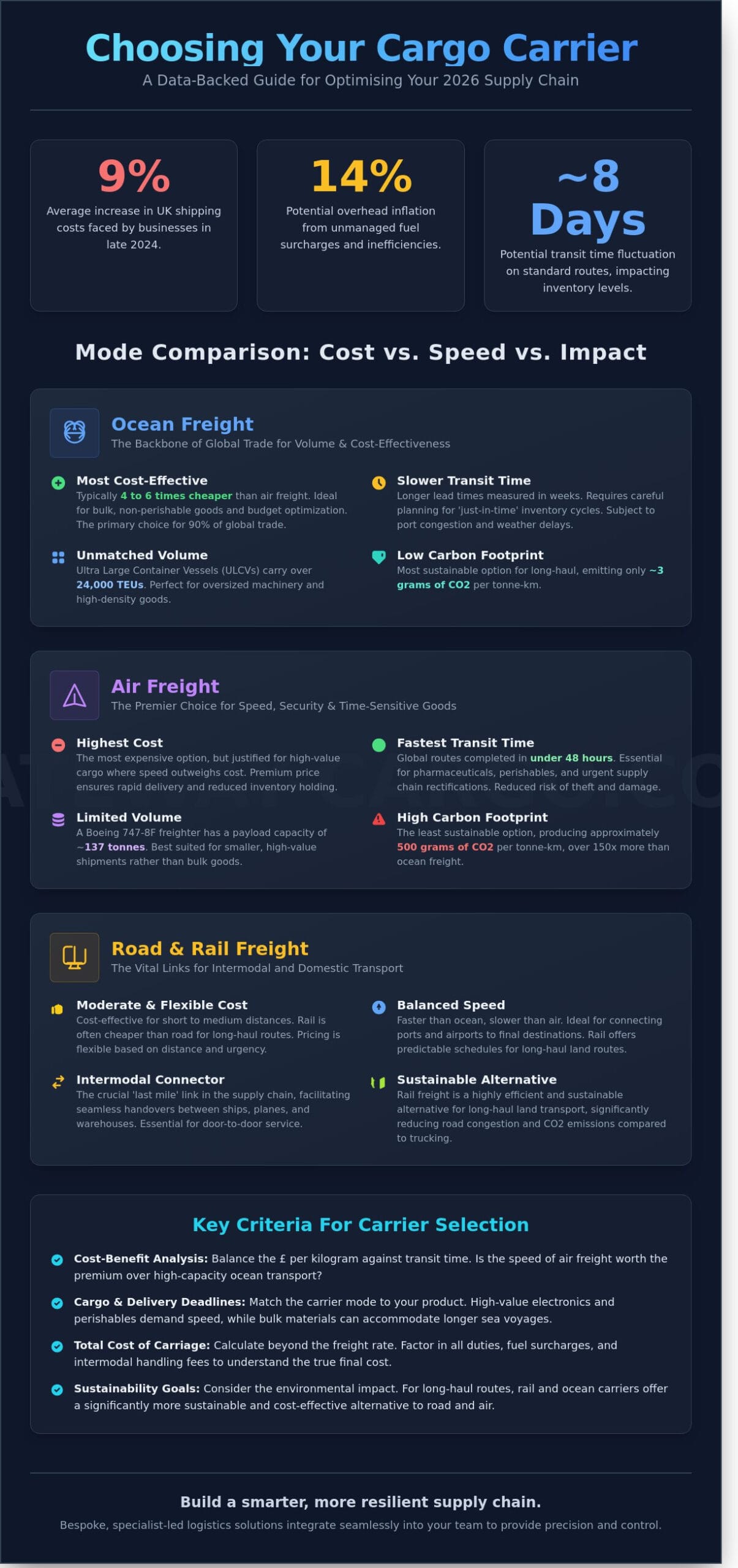
Choosing the right cargo carrier requires a precise balance between lead times and budgetary constraints. A Triple-E class vessel carries over 18,000 TEUs, while a Boeing 747-8F manages approximately 134 tonnes. This massive discrepancy in scale defines the strategic choice for UK businesses. Sea freight often costs 4 to 6 times less than air transport. It’s the primary choice for 90% of global trade because of this cost efficiency. These decisions align with broader frameworks like the National Freight Strategic Plan, which highlights the necessity of efficient multimodal systems to maintain economic stability. From a sustainability perspective, ocean vessels emit about 3 grams of CO2 per tonne-km. Compare this to the 500 grams produced by air freight. For bulk goods, the environmental and financial benefits of maritime transport are undeniable.
The Advantages of Ocean Cargo Carriers
Ocean transport remains the most cost-effective method for long-distance trade. High-density goods or oversized industrial machinery require the unmatched volume of maritime vessels. Shippers must choose between Full Container Load (FCL) for exclusive use or Less than Container Load (LCL) to share space and reduce costs. Gateway Cargo specialists optimise these routes, navigating UK port congestion at Felixstowe or Southampton to ensure predictable delivery windows. Our team handles the complexities of maritime logistics so you don’t have to worry about delays. We provide the expertise needed to manage the 2026 shipping landscape effectively.
When Air Cargo Carriers are the Only Option
Air freight is essential for high-value electronics, pharmaceuticals, or perishable goods with short shelf lives. Shorter transit times, often under 48 hours for global routes, significantly reduce the risk of theft and damage. All operations adhere to strict IATA standards for safety and efficiency. This mode is a critical solution when supply chain disruptions demand immediate rectification. You can explore our bespoke air solutions to see how we mitigate these risks. While the price point is higher, the security and speed provide a necessary safety net for time-sensitive cargo. Tighter airport security protocols further protect your investment during transit.
- Ocean: Best for bulk, non-perishable goods and cost reduction.
- Air: Best for high-value, urgent, or fragile shipments.
- Sustainability: Ocean carriers offer a 90% reduction in carbon footprint per tonne compared to air.
Road and Rail: The Vital Links in Intermodal Transport
Ground transport serves as the critical connective tissue in global trade. While ships and planes handle the long-haul legs, every cargo carrier operating on land ensures goods actually reach their final destination. In the UK, 89% of all goods moved by land are transported by road, highlighting the heavy reliance on HGVs for regional distribution. Integrating these land-based systems creates a smarter supply chain. Logistics managers often evaluate the four primary modes of cargo transportation to balance speed against environmental impact. Choosing the right mix of road and rail is essential for maintaining a seamless logistics chain from port to warehouse.
Road Freight and the Push for Sustainability
The UK government’s commitment to end the sale of new non-zero emission HGVs by 2035 has accelerated the shift toward sustainable road carriage. Gateway Cargo leads this transition by deploying EV vehicles for urban deliveries and trialling hydrogen-powered trucks for longer routes. Our green corridors reduce carbon emissions by up to 25% through strict route optimisation and telematics. Success in road freight depends on more than just the vehicle. It requires driver expertise and AI-driven software to bypass congestion on the M25 or M6. This flexibility makes road transport the only viable solution for the complex ‘last-mile’ requirements of modern e-commerce.
Rail Freight: The Middle Ground of Logistics
Rail offers a high-volume alternative that bridges the gap between slow sea freight and expensive air transport. A single freight train can remove up to 76 HGVs from the UK road network, significantly lowering the carbon footprint per tonne-kilometre. For bulk commodities like steel or construction materials, rail reduces transport costs by approximately 15% compared to long-haul trucking. It’s a reliable choice for transcontinental movement. Rail schedules remain more predictable than road transit because they aren’t hindered by the 1.4 million hours of delay experienced annually on the Strategic Road Network. Using a rail-focused cargo carrier strategy provides a stable middle ground for moving heavy raw materials efficiently.
Key Criteria for Selecting Your International Cargo Carrier
Selecting an international cargo carrier requires a meticulous balance between speed and the bottom line. For a standard shipment from Shanghai to Felixstowe, air freight typically averages 4 to 7 days; meanwhile, ocean freight requires approximately 33 days. You’ve got to decide if that time saving justifies the price gap. Total cost of carriage involves more than just the base rate. It includes:
- Bunker Adjustment Factor (BAF) for fuel fluctuations
- Terminal Handling Charges (THC) at UK ports like Southampton or Tilbury
- Currency Adjustment Factors (CAF) to hedge against Sterling volatility
In 2024, these surcharges added an average of 18% to base freight quotes for UK-bound shipments. Your goods’ physical properties also dictate your mode. Heavy machinery exceeding 4,500kg often requires specialised flat-rack containers or heavy-lift vessels. If you’re transporting lithium-ion batteries, your cargo carrier must strictly adhere to IATA Dangerous Goods Regulations for air or the IMDG Code for sea. Improperly declared hazardous goods can result in UK fines exceeding £25,000 per shipment.
Addressing the ‘Cheapest is Best’ Misconception
Low-cost carriers often lack the infrastructure to handle unforeseen disruptions. A 48-hour delay at a port like London Gateway can trigger demurrage fees starting at £120 per container per day. Professional freight forwarders vet carriers for financial stability and safety records to prevent your goods from being impounded due to carrier insolvency. Selecting a carrier based solely on price frequently leads to increased long-term operational costs.
Customs and Compliance Requirements
Carriers have different levels of integration with HMRC’s Customs Declaration Service (CDS). Choosing a partner that understands DDP (Delivered Duty Paid) ensures you don’t face unexpected VAT bills at the border. It’s vital to ensure your carrier maintains AEO (Authorised Economic Operator) status. This certification speeds up the customs process and reduces the likelihood of physical cargo inspections by up to 30%. This efficiency is essential for maintaining a lean supply chain in 2026.
Ready to secure your supply chain? Optimise your global shipping strategy with our expert vetting process.
Gateway Cargo: Bespoke Solutions for Every Carrier Mode
Gateway Cargo delivers “Seamless Logistics for a Smarter Supply Chain” by merging high-level technical innovation with granular industry knowledge. Our logistics specialists operate as a direct extension of your internal team, removing the friction often found in global trade. We don’t simply book space; we evaluate every cargo carrier based on real-time performance data, carbon intensity, and cost-efficiency. By leveraging our established global network, we provide UK businesses with access to priority boarding and competitive £ rates that remain stable despite market volatility.
Our commitment to the future involves a robust AI-driven digital strategy. This system provides predictive analytics for 98% of our global routes, allowing us to bypass disruptions before they occur. Sustainability isn’t a secondary thought. We’ve committed to a 25% reduction in carbon emissions across our road fleet by the end of 2026 through the deployment of heavy-duty EV vehicles and the establishment of green shipping corridors. This forward-thinking approach ensures your business meets its environmental targets while maintaining peak operational speed.
Expertise Across Air, Ocean, and Road
We provide bespoke freight solutions that align with the specific demands of your industry, whether that involves temperature-controlled air freight or oversized ocean cargo. Our team excels at managing complex intermodal transfers, synchronising road, rail, and sea movements to keep your supply chain moving without costly delays. We currently maintain a 99.2% on-time delivery rate across our primary European road networks. To learn more about navigating maritime logistics, read our A Complete Guide to Ocean Freight Forwarding. This resource details how we mitigate risks and reduce costs for our UK partners.
Contact Our Logistics Specialists Today
Obtaining a personalised quote for your next international shipment is straightforward. Our specialists analyse your cargo’s dimensions, destination, and deadline to recommend the most effective cargo carrier for the job. Staying informed is vital in a changing market, so we encourage you to utilise our ‘Insights’ hub. This platform offers data-heavy whitepapers and weekly market updates to help you stay ahead of global carrier trends and regulatory changes. Our goal is to provide the intelligence you need to make informed, cost-effective decisions for your 2026 logistics planning.
Optimise Your Global Logistics Strategy for 2026
Navigating the complexities of international trade requires more than just a standard shipping provider. You need a strategic partner that understands how to balance the 3.8% projected increase in UK import volumes with the urgent mandate for decarbonisation. Selecting the right cargo carrier involves weighing the rapid delivery of air freight against the massive capacity of ocean vessels while ensuring road links remain resilient. Statistics show that businesses integrating intermodal transport can reduce their total transit times by up to 15%.
Gateway Cargo provides the technical edge you need to stay competitive in a volatile market. We’ve deployed AI-driven route optimisation to reduce delivery windows by 12% and expanded our UK EV fleets to support your 2030 Net Zero targets. Whether you require bespoke freight solutions for air, ocean, or road, our specialists work as your internal team to manage every £1 of your logistics budget with precision. It’s time to move beyond traditional shipping and embrace a smarter approach.
Partner with Gateway Cargo for seamless global logistics and build a supply chain that’s ready for the future.
Frequently Asked Questions
What is the difference between a cargo carrier and a freight forwarder?
A cargo carrier owns and operates the physical assets like ships, planes, or lorries used to move goods. A freight forwarder acts as an expert intermediary that organises the entire journey, including customs clearance and warehousing. While the carrier handles the physical transport, the forwarder manages the complex 12-step documentation process and negotiates rates on your behalf.
Is sea freight or air freight better for my small business?
Sea freight is typically 4 to 6 times cheaper for shipments over 100kg, making it the better choice for maintaining healthy profit margins. Air freight is 10 times faster and suits high-value electronics or perishables that require delivery within 48 hours. In 2026, most UK SMEs use sea freight for 85% of their inventory to offset rising energy costs.
How much does it cost to use a commercial cargo carrier in 2026?
Average rates for a 40-foot container from Shanghai to Felixstowe are projected to sit between £3,200 and £4,800 in 2026. These figures include a mandatory 5% “Green Fuel” surcharge following the 2025 maritime emissions update. You should also budget £150 for UK customs entry and local port handling fees to ensure your cargo carrier can complete the delivery.
Can I track my shipment once it’s with the cargo carrier?
You can track your shipment in real-time using GPS-enabled telematics and blockchain portals provided by your cargo carrier. Modern systems now offer 15-minute update intervals and predictive ETAs based on current port congestion data. This visibility allows you to manage warehouse staffing and customer expectations with 98% accuracy throughout the transit period.
What are the most common causes of cargo carrier delays?
Port congestion and adverse weather conditions account for 65% of all international shipping delays. In 2026, labour shortages at major UK hubs like Southampton still cause 24-hour backlogs during peak seasons. Technical issues with automated crane systems or customs documentation errors also contribute to a 12% average increase in total transit times for global shipments.
Are there sustainable cargo carrier options for international shipping?
Sustainable options include vessels powered by green methanol and electric HGVs for final-mile delivery in London’s Ultra Low Emission Zone. By 2026, 30% of global fleets will use wind-assisted propulsion to reduce carbon emissions by up to 20% per voyage. Choosing a partner with a verified Net Zero strategy helps your business meet the UK’s strict 2050 climate targets.
What documents do I need to provide to my cargo carrier?
You must provide a Commercial Invoice, a detailed Packing List, and a Bill of Lading or Air Waybill. For exports from the UK, a Customs Declaration (C88) and a Certificate of Origin are essential for 100% regulatory compliance. Missing any of these 5 core documents can result in a £250 daily storage fine at the port of entry.
How do I choose between FCL and LCL for ocean carriage?
Choose Full Container Load (FCL) if your cargo exceeds 15 cubic metres or 10 standard pallets. Less than Container Load (LCL) is more cost-effective for smaller volumes, though it involves a 3-day delay for consolidation at the port. FCL offers better security and a 20% faster transit time because your goods don’t share space with other shippers.