
How to Choose an International Freight Forwarder: A Comprehensive Guide
Navigating the complexities of global trade presents a significant challenge for any business. The risk of unexpected delays, unpredictable costs, and complex customs procedures can disrupt your entire supply chain and impact your bottom line. Selecting the right international freight forwarder is therefore not merely a logistical choice; it is a critical strategic decision that underpins your company’s growth and reliability. For many UK businesses, the process of vetting a partner’s expertise and ensuring they can manage industry-specific requirements feels overwhelming, often leading to costly inefficiencies.
This comprehensive guide is engineered to provide clarity and control over this crucial process. We will walk you through a structured, step-by-step framework for evaluating and choosing the ideal logistics partner for your organisation. You will learn precisely how to assess a forwarder’s capabilities, scrutinise pricing to prevent hidden charges, and confirm their ability to simplify customs and compliance. The result is a partnership that delivers cost-effective, predictable shipping and transforms your supply chain into a powerful competitive advantage.
Key Takeaways
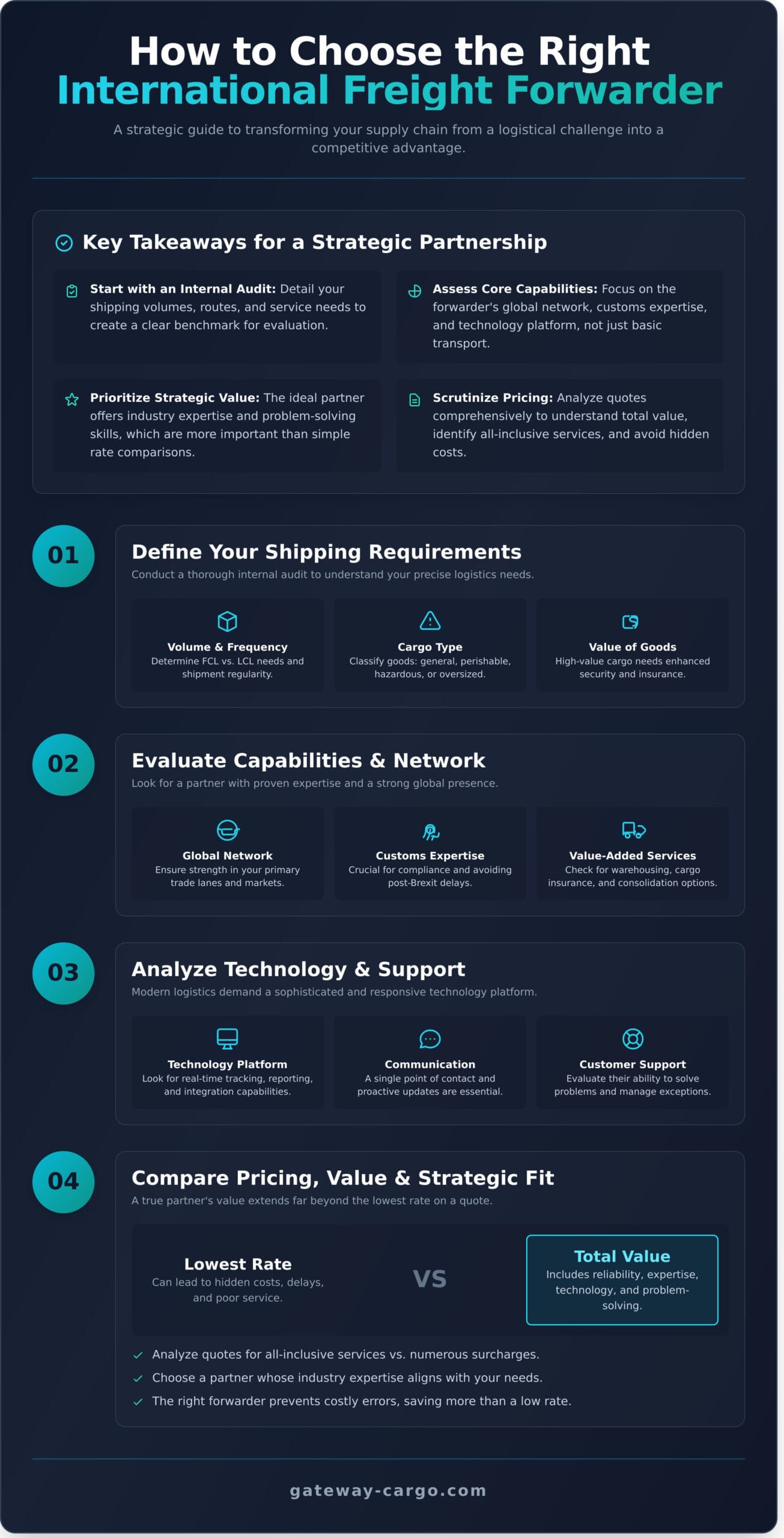
- Begin your selection process with a detailed internal audit of your shipping volumes, routes, and specific service requirements to establish a clear evaluation benchmark.
- Assess a potential partner’s capabilities beyond basic transport, focusing on their global network, customs clearance expertise, and the sophistication of their technology platform.
- The ideal international freight forwarder acts as a strategic partner; your evaluation should prioritise their industry expertise and problem-solving abilities over simple rate comparisons.
- Learn how to analyse a freight quote comprehensively to understand the total value, identify all-inclusive services, and avoid unexpected costs that impact your budget.
What is an International Freight Forwarder and Why Do You Need One?
In global trade, an international freight forwarder is far more than a simple shipping agent; they are the architects of your supply chain. Acting as a crucial intermediary between your business (the shipper) and the various transportation services required to move goods, their primary role is to orchestrate a seamless and efficient journey for your cargo. A reputable freight forwarder leverages their expertise and network to deliver significant benefits, including optimised costs, robust risk mitigation, and simplified logistics management.
While often confused, their role is distinct. Carriers (like shipping lines or airlines) own the transport assets. Customs brokers focus solely on customs clearance. A 3PL (Third-Party Logistics) provider may offer a broader suite of services, but a forwarder specialises in the strategic planning and execution of international freight movements.
The Core Responsibilities of a Freight Forwarder
An effective forwarding partner manages the critical details of your shipment, providing a single point of contact for complex operations. Their specialists handle a wide array of essential tasks to ensure your goods arrive on time and in compliance with all regulations.
- Arranging Transportation: Sourcing and booking the most efficient and cost-effective transport modes, including air, ocean, and road freight, or creating integrated intermodal solutions.
- Managing Documentation and Customs: Navigating the complexities of international trade documentation, from Bills of Lading to commercial invoices, and managing customs clearance procedures, which is especially critical for UK businesses trading post-Brexit.
- Providing Value-Added Services: Offering supplementary solutions such as secure warehousing, comprehensive cargo insurance, and cargo consolidation to combine smaller shipments into one larger, more economical load.
When to Partner with a Forwarder vs. Booking Direct
While booking directly with a carrier may seem viable for very simple, point-to-point domestic shipments, it introduces considerable risk and complexity in international trade. Partnering with a forwarder becomes a strategic necessity in most scenarios, particularly for multi-modal shipments involving sea, air, and land transport, or for goods requiring intricate customs procedures. Their established global network and deep expertise provide a level of security and efficiency that is nearly impossible to replicate in-house, preventing costly delays and compliance issues.
Step 1: Define Your Company’s Shipping Requirements
Before you begin evaluating potential partners, the most critical step is to conduct a thorough internal audit of your own logistics needs. The ‘best’ international freight forwarder is not a one-size-fits-all entity; it is the one whose capabilities, network, and expertise precisely align with your operational demands. Creating a detailed profile of your shipping activity is the foundation for a successful and strategic partnership. This initial deep dive is a fundamental step in learning how to choose a freight forwarder that aligns with your long-term goals, considering not only your current volumes but also your projected growth.
Analyse Your Shipment Characteristics
A granular understanding of your cargo is essential. Document the specific details of what you ship to provide a clear brief to potential forwarders. Key factors include:
- Volume and Frequency: Do you typically ship enough goods to fill a Full Container Load (FCL), or are your consignments better suited for Less than Container Load (LCL) consolidation? Establish if your shipping schedule is regular and predictable or ad-hoc and reactive.
- Cargo Type: Classify your goods. Are they general consumer products, perishables requiring a cold chain, hazardous materials that demand specialised handling, or oversized project cargo with unique transport needs?
- Value of Goods: Determine the typical value of your consignments. High-value shipments, such as those exceeding £100,000, will necessitate enhanced security protocols and more comprehensive cargo insurance.
Map Your Primary Trade Lanes
An effective international freight forwarder must have demonstrable strength in your key markets. Identify the primary countries and regions you import from and export to. A partner with a robust network, local offices, and strong relationships with customs authorities in your specific trade lanes-for instance, navigating post-Brexit regulations between the UK and the EU-is an invaluable asset that can prevent costly delays and ensure compliance.
Establish Your Priorities: Speed, Cost, and Service
Logistics often involves a trade-off between three core pillars: transit time, budget, and service level. It is vital to determine your business’s non-negotiables. Is rapid delivery via air freight the primary driver, even at a premium cost? Or is optimising your budget with longer ocean freight transit times the main objective? Define the level of communication and support you require, from a dedicated account manager to 24/7 digital tracking portals.
Step 2: Evaluate a Forwarder’s Capabilities and Network
Once you have a shortlist of potential partners, the next critical phase is to scrutinise their operational backbone. A glossy website is one thing; a robust, reliable global network and a comprehensive service portfolio are what truly deliver value. An effective international freight forwarder acts as an extension of your business, and their capabilities must align perfectly with your supply chain requirements. This step focuses on verifying their tangible assets, proven expertise, and the credentials that underpin their promises.
Assess Their Global Network and Local Presence
A forwarder’s reach is paramount. Investigate whether they have their own offices or a network of trusted, long-standing agents in your key origin and destination markets. A strong local presence, for instance at major UK ports like Felixstowe or within key European trade hubs, is invaluable. This on-the-ground expertise ensures smoother navigation of local customs, port procedures, and potential disruptions, preventing costly delays and communication gaps.
Scrutinise Their Service Offerings
Look for a forwarder that offers a truly integrated solution rather than a fragmented list of services. Your goal is to find a single partner who can manage the entire journey of your goods, optimising for both cost and efficiency. A comprehensive service offering should include:
- Multi-Modal Transport: Full capabilities across air, ocean (FCL & LCL), road, and rail freight to provide flexible and resilient shipping options.
- In-House Customs Brokerage: A dedicated, in-house team is often superior to an outsourced one. They offer streamlined communication and deep expertise in navigating HMRC procedures, ensuring compliance and swift clearance.
- Value-Added Services: Look for capabilities beyond simple transport, such as secure warehousing, inventory management, order fulfilment, and final-mile distribution solutions.
Verify Licenses, Insurance, and Certifications
Due diligence is non-negotiable. A reputable international freight forwarder will be transparent about their credentials, which are a testament to their professionalism and financial stability. Request proof of the following:
- Industry Memberships: In the UK, membership with bodies like the British International Freight Association (BIFA) indicates adherence to a professional code of conduct.
- Cargo Liability Insurance: Ask for a copy of their insurance certificate. Understand the limits of their liability and inquire about options for all-risk cargo insurance to fully protect the value of your goods.
- Quality & Security Certifications: Look for certifications like ISO 9001 (quality management) and, crucially, Authorised Economic Operator (AEO) status. AEO certification is a mark of a secure, reliable partner recognised by customs authorities worldwide.
Step 3: Analyze Technology, Communication, and Support
In modern global logistics, a forwarder’s digital infrastructure is as critical as its physical transportation network. The right partner leverages technology to provide transparency and control, acting as a seamless extension of your own team. A truly effective international freight forwarder invests in systems and people that optimise your supply chain, providing clarity and proactive solutions when you need them most.
Technology and Visibility Platforms
Your ability to track, manage, and report on shipments is fundamental to efficient operations. A forward-thinking partner will provide a sophisticated online portal that offers more than a simple map. When evaluating a potential forwarder, inquire about their digital capabilities:
- Do they provide a client portal with real-time, 24/7 shipment tracking?
- Can you access, manage, and download critical documentation like customs declarations and bills of lading online?
- What are their data security protocols, and do they offer API integration with your existing ERP or inventory management systems?
These tools are essential for maintaining visibility and control over your cargo from origin to final destination.
Communication and Customer Service Model
When disruptions occur, the quality of communication is what separates an adequate supplier from a strategic partner. Assess their customer service structure to understand how your business will be supported. Will you be assigned a dedicated account manager who understands your business needs, or will you be routed through a generic call centre? It is vital to establish clear expectations for response times and, crucially, how they communicate delays or unforeseen challenges. Proactive communication is a hallmark of a reliable international freight forwarder.
Requesting References and Case Studies
A confident forwarder will have a proven track record of success and should be willing to share it. Requesting references from businesses within your industry, particularly those operating in the UK, provides invaluable insight into their performance. Furthermore, ask for case studies relevant to your specific trade lanes or cargo types. This evidence demonstrates their expertise and provides tangible proof of their ability to deliver on their promises. A partner invested in a long-term relationship will gladly provide this validation. For examples of bespoke logistics solutions, you can explore our insights.
Step 4: Compare Pricing, Value, and Strategic Fit
After shortlisting candidates, the final decision often comes down to the details. While cost is a critical factor, the cheapest quote is rarely the most cost-effective in the long run. A truly strategic partnership with an international freight forwarder is built on total value, encompassing reliability, transparency, and future-readiness. The goal is to find a partner who optimises your supply chain, not just a vendor who moves a box for the lowest price.
How to Read a Freight Quote Correctly
A detailed quote is a mark of a transparent provider. Look beyond the headline figure and scrutinise the breakdown to avoid unexpected costs that can inflate your final bill. A comprehensive quote should be clear and itemised. Key areas to verify include:
- All Potential Surcharges: Confirm the inclusion of costs like Fuel Adjustment Factor (FAF), UK port congestion fees, security charges, and customs clearance administration fees.
- Consistent Incoterms: Ensure you are comparing like-for-like quotes. A price based on EXW (Ex Works) will be vastly different from one based on DDP (Delivered Duty Paid).
- Process for Unexpected Charges: Ask how they handle and communicate unforeseen costs, such as demurrage, detention, or charges from customs inspections at ports like Felixstowe or Southampton.
Assessing Their Commitment to Sustainability
In today’s market, sustainability is a commercial imperative. A forward-looking partner will have clear green logistics initiatives, demonstrating their commitment to reducing the environmental impact of their operations. Inquire about their investment in low-emission vehicles, their use of sustainable aviation fuels, or their ability to provide carbon footprint reporting and offsetting solutions. This commitment not only supports your ESG goals but also enhances your brand reputation.
Ensuring Scalability for Future Growth
Your business is poised for growth, and your logistics partner must be able to scale with you. Assess whether a potential forwarder can manage a significant increase in shipping volume without compromising service quality. Do they have the global network and expertise to support your expansion from the UK into new international markets? A partner with robust infrastructure and advanced technology is essential for long-term success. Find a forward-thinking partner for your supply chain.
Choosing Your Strategic Logistics Partner
Selecting the right partner for your global shipping is a critical business decision that extends far beyond simple cost comparison. The process hinges on a clear definition of your requirements and a thorough evaluation of a forwarder’s network, technological capabilities, and commitment to support. Ultimately, the best international freight forwarder acts as a strategic ally, providing tangible value that enhances your operational efficiency and resilience.
At Gateway Cargo, we deliver precisely that. As proven experts in supply chain optimisation, we provide bespoke freight solutions tailored to your specific objectives. Our commitment to sustainable logistics and advanced technology ensures your cargo moves seamlessly and responsibly across the globe. We work as an extension of your team, providing the expertise and infrastructure necessary for your business to thrive in the competitive international market.
Ready to build a smarter, more efficient supply chain? Request a consultation to discuss your freight forwarding needs. Let us demonstrate how a true logistics partnership can propel your business forward.
Frequently Asked Questions
What is the difference between a freight forwarder and a customs broker?
A freight forwarder is a logistics specialist responsible for arranging the entire transportation of your goods from origin to destination. This includes booking cargo space, managing documentation, and coordinating carriers. A customs broker, conversely, focuses specifically on regulatory compliance, ensuring your shipment clears customs legally and efficiently. They handle the submission of declarations to HMRC, calculate duties and taxes, and ensure all UK import and export laws are met. While some companies offer both services, their core functions are distinct.
How do international freight forwarders typically structure their fees?
Forwarder fees are typically itemised in a detailed quotation to ensure full transparency. The primary cost is the freight charge itself-the rate for air or ocean transport. Additional charges include origin and destination handling, fuel surcharges, and customs clearance fees. You may also see costs for specific services such as cargo insurance, warehousing, or inland haulage. Reputable forwarders provide a clear breakdown of all anticipated costs in British Pounds (£), preventing unexpected expenses upon arrival.
What key documents are required for international shipping that a forwarder handles?
An experienced forwarder manages a range of critical documents to ensure seamless transit. The core documents include the Commercial Invoice, which details the transaction, and the Packing List, which specifies the shipment’s contents. For transport, they handle the Bill of Lading (for sea freight) or Air Waybill (for air freight). Crucially, they also prepare and submit the necessary customs declarations to authorities like HMRC, ensuring full compliance and avoiding costly delays at the UK border.
Why shouldn’t I just book my freight directly with an ocean carrier or airline?
While booking directly with a carrier is possible, it often creates more complexity and cost. Carriers typically provide only port-to-port or airport-to-airport service, leaving you to manage customs, inland transport, and documentation. An international freight forwarder acts as your single point of contact, optimising the entire process. They leverage their buying power for better rates, consolidate smaller shipments, and provide end-to-end solutions, which is a far more efficient and reliable approach for most businesses.
How does a freight forwarder handle cargo damage or loss during transit?
In the unfortunate event of cargo damage or loss, your freight forwarder acts as your advocate. Their first step is to help you document the incident correctly and file a formal claim with the responsible carrier. They manage the complex communication and follow-up required in the claims process. Proactively, a forwarder will also advise on and arrange comprehensive cargo insurance before shipment, providing a crucial financial safeguard against unforeseen events during transit and ensuring your interests are protected.
What are Incoterms and why is it important my forwarder understands them?
Incoterms are a set of globally recognised rules that define the responsibilities of sellers and buyers for the delivery of goods. They clarify who is responsible for shipping, insurance, and customs clearance at each stage of the journey. It is critical that your forwarder has expert knowledge of Incoterms like EXW, FOB, and DDP to ensure your liabilities and costs are clearly defined. This expertise prevents disputes, avoids unexpected charges, and ensures a smooth, predictable supply chain operation.